In this article
AI is a long-term transition
Much of the talk about AI is about the latest models and applications. Behind it sits a slower and longer change: compute demand that keeps growing and needs new physical infrastructure. Changes like this usually play out over decades, much like building out power grids or telecommunications.
So infrastructure readiness has to be planned over the same long horizon. A site chosen today will operate for decades.
Compute needs physical infrastructure
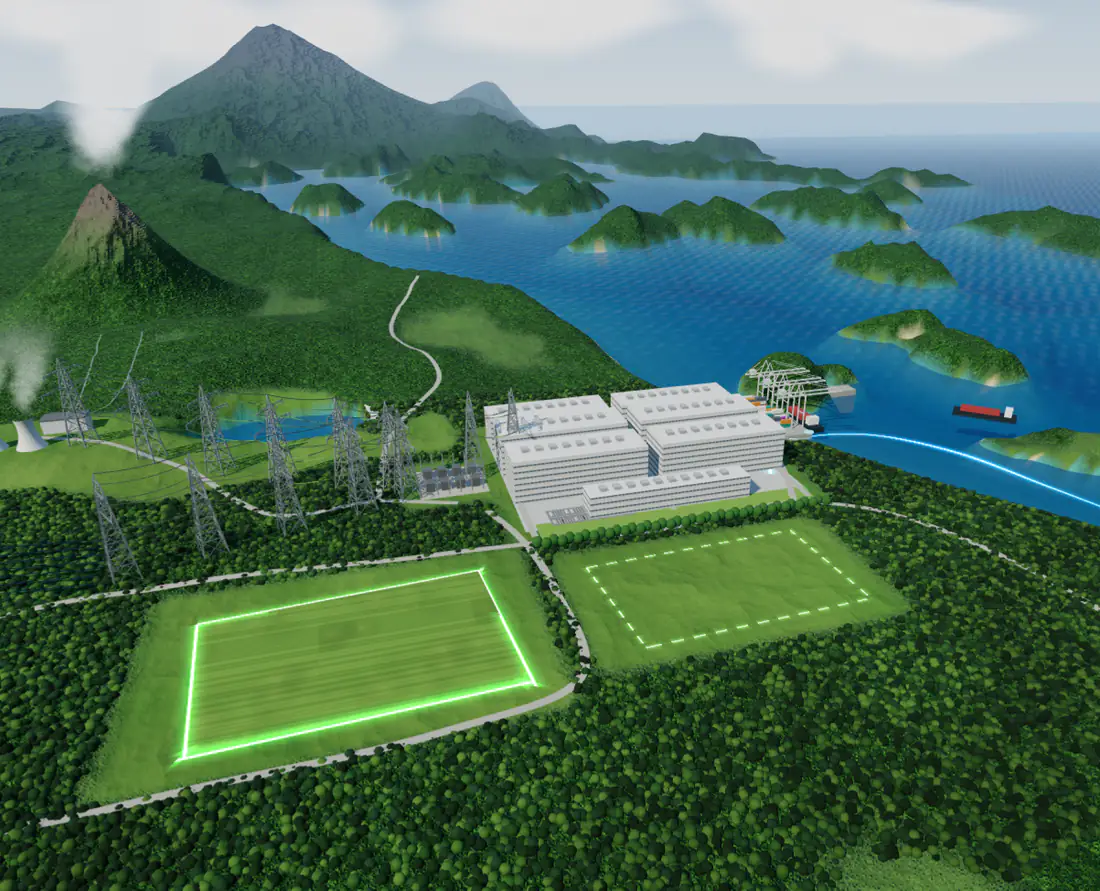
An AI data center is more than a building full of servers. It needs:
energy at scale and a reliable supply;
a core site with room to grow;
fiber over more than one route;
efficient water use and cooling;
physical and cyber security;
clear governance from the start.
Each of these has its own lead time. Generation, transmission and permits often take longer than the building itself.
National and community value
Infrastructure on this scale affects the regions around it. Development has to account for communities, the environment, jobs, local suppliers and long-term national value. Projects designed with this in mind from the start tend to be accepted more easily and last longer.
Government and private-sector coordination
Large projects cannot move on their own. They need standards, permits, security rules, supporting infrastructure and investment coordination. Government and the private sector complement each other: government sets the framework and core infrastructure, the private sector brings capital, technology and delivery.
What this means for Indonesia
Indonesia has a set of opportunities: diverse energy sources, large regions and a position in Southeast Asia. But an opportunity at country level is not yet a ready site. Every corridor and site still has to be proven technically and commercially: energy that can actually be delivered, land with clear status, validated connectivity and real market interest.
The PALLAS approach
PALLAS develops sites with an approach that is:
energy-led: starting from the energy source, then land, fiber and permits;
evidence-based: commitment grows once technical and commercial evidence is in;
multi-corridor: several regions are studied at once, without relying on one site;
responsible: accounting for the environment, communities and security;
market-validated: prospective user interest is tested before costly construction.
The AI transition will take a long time. Infrastructure that is ready, and can be shown to be ready, needs to start now.
This article gives strategic context. It is not a projection of MW capacity, revenue or demand for any specific site.